Astronomy Picture Of the Day
14 October 2026 06:28
What a cosmic coincidence! In today’s image, Mars joins the Beehive cluster (M44 or Praesepe) below an auroral curtain and above a horizon of happy little trees near Lansjärv, Sweden. An eruption off the Sun reached Earth on October 10th, 2026 causing strong disturbances in Earth’s magnetic field. Energetic particles from the eruption collide with and energize the molecules in Earth’s atmosphere, which release that extra energy as the colorful aurora captured here. Auroras, or guovssahasat in North Sámi, is traditionally viewed with respect by the Sámi people indigenous to Sweden and other Arctic regions. Coincidentally, Mars appeared closest to the center of the Beehive cluster in the sky at the time. Although bees have been to space, the Beehive cluster is actually a swarm of young stars. Their rotation periods have helped humanity learn about how stars spin slower over time as they lose mass through their stellar winds.
post sent by @ - tfrbot.com
Читать полностью…
Astronomy Picture Of the Day
12 October 2026 06:30
How many moons can you see? The best answer is five: four orbiting Jupiter and Luna orbiting Earth. This multi-moon picture was possible because Earth's Moon moved directly in front of Jupiter last week. The featured image is a series of exposures near alignment taken from Westchester, New York, USA. The sunlit crescent of Earth's Moon, on the lower left, is overexposed, while the Moon's night side, on the upper right, is faintly illuminated by Earthshine. Lined up nearly vertically above our Moon, listed from bottom to top, are Jupiter's bright Galilean satellites: Ganymede, Io, Callisto, and Europa. Callisto, Ganymede, and Io are larger than Earth's Moon, while Europa is only slightly smaller. NASA's robotic spacecraft Juno is currently orbiting Jupiter and has made close passes near three of these moons.
post sent by @ - tfrbot.com
Читать полностью…
Astronomy Picture Of the Day
10 October 2026 06:30
Tidally locked in synchronous rotation, the Moon always presents its familiar nearside to denizens of planet Earth. From lunar orbit, the Moon's farside can become familiar, though. In fact this sharp picture, a mosaic from the Lunar Reconnaissance Orbiter's wide angle camera, is centered on the lunar farside. Part of a global mosaic of over 15,000 images acquired between November 2009 and February 2011, the highest resolution version shows features at a scale of 100 meters per pixel. Surprisingly, the rough and battered surface of the farside looks very different from the nearside covered with smooth dark lunar maria. A likely explanation is that the farside crust is thicker, making it harder for molten material from the interior to flow to the surface and form dark, smooth maria.
post sent by @ - tfrbot.com
Читать полностью…
Astronomy Picture Of the Day
08 October 2026 06:14
How was the Saturn system imaged so clearly? Astrophotographer Tom Williams captured such exquisite details due to one night of exceptional atmospheric conditions above the United Kingdom. This means more than a cloudless sky. Pockets of air at different temperatures and densities move around and bend light as it travels through Earth’s atmosphere, distorting astronomy images. This is called “seeing”. Less atmospheric turbulence means clearer images. The astrophotographer reduced the impact of seeing with the lucky imaging technique: thousands of short-exposure images are taken very quickly with a high-speed camera and the clearest images are added up. Which object in this smörgåsbord interests you? Perhaps Titan or the icy stripes of Enceladus? Maybe the gaps and spokes in Saturn’s rings? Saturn's opposition, when Earth passes in between the planet and the Sun, occurred on October 4th. Due to the planet's proximity and full illumination from the Sun, now is a great time of year to observe it!
post sent by @ - tfrbot.com
Читать полностью…
Astronomy Picture Of the Day
06 October 2026 06:20
Have you ever seen a complete auroral oval? You can't see one from the ground because it makes too large a circle around one of Earth's magnetic poles. But spacecraft high above the Earth can see them. The featured video from ESA and CAS's robotic SMILE spacecraft shows not only a full auroral oval, but using ultraviolet light, one that occurred during the day. The time-lapse covers about an hour in late July and shows visually how variable and turbulent auroras really are. The points of light on the sides are distant stars that appear to move only because SMILE's camera view shifts as the spacecraft orbits the Earth. A goal of SMILE is to better understand how the Sun's wind interacts with the Earth's magnetosphere -- and so better understand how to protect astronauts, spacecraft, and ground-based electrical grids from solar storms.
Tomorrow's picture: a ghost
post sent by @ - tfrbot.com
Читать полностью…
Astronomy Picture Of the Day
04 October 2026 06:24
Yes, but can your rainbow do this? After the remnants of Hurricane Florence passed over the Jersey Shore, New Jersey, USA in 2018, the Sun came out in one direction but something quite unusual appeared in the opposite direction: a hall of rainbows. Over the course of the next half hour, to the delight of the photographer and his daughter, vibrant supernumerary rainbows faded in and out, with at least five captured in this featured single shot. Supernumerary rainbows only form when falling water droplets are all nearly the same size and typically less than a millimeter across. Then, sunlight will not only reflect from inside the raindrops, but interfere, a wave phenomenon similar to ripples on a pond when a stone is thrown in. In fact, supernumerary rainbows can only be explained with waves, and their noted existence in the early 1800s was considered early evidence of light's wave nature.
Your Sky Surprise: What picture did APOD feature on your birthday? (post 1995)
post sent by @ - tfrbot.com
Читать полностью…
Astronomy Picture Of the Day
01 October 2026 06:29
Have you ever seen the full moon rise? This colorful image was photographed last weekend in Sicily, just outside the town of Nicosia, in Italy. It is a composite photograph that shows the Moon rising as the sky turns darker. Lower clouds are reflecting the colors of antitwilight, while ash and gas from Mount Etna are seen higher in the background. The pink band lower in the sky is called the Belt of Venus. During a full moon, the Moon and the Sun are in opposition in the sky: the moon rises as the sun sets. The lunar phase cycle lasts approximately 29.5 days (but the Moon takes approximately 27 days to orbit the Earth). In some cultures of the Northern Hemisphere, the September full moon is called the Harvest Moon. Does your culture have a special name for it? (A full moon by any other name would shine as bright.)
post sent by @ - tfrbot.com
Читать полностью…
Astronomy Picture Of the Day
30 September 2026 15:17
APOD: 2026 September 29 - Sh2-188: The Shrimp Nebula Astronomy
What causes the swirl in the Shrimp Nebula? Its high speed is likely. What is sure is that Sh2-188 is one of the larger planetary nebulas on the night sky, by angular size, spanning about half the diameter of the Moon. Moreover, the white-dwarf core -- leftover from the Sun-like star that shed its outer atmosphere -- is moving unusually fast through interstellar space, creating a bow shock most visible on the upper left that is similar to a boat plowing through water. Although faint, the Shrimp Nebula glows also by compressing and brightening gas on its leading edge. The featured image was taken in the light of hydrogen, sulfur, and oxygen by a backyard telescope in Krakow, Poland and then digitally adjusted to approximate the nebula's true colors. Tech. U.
post sent by @ - tfrbot.com
Читать полностью…
Astronomy Picture Of the Day
28 September 2026 06:24
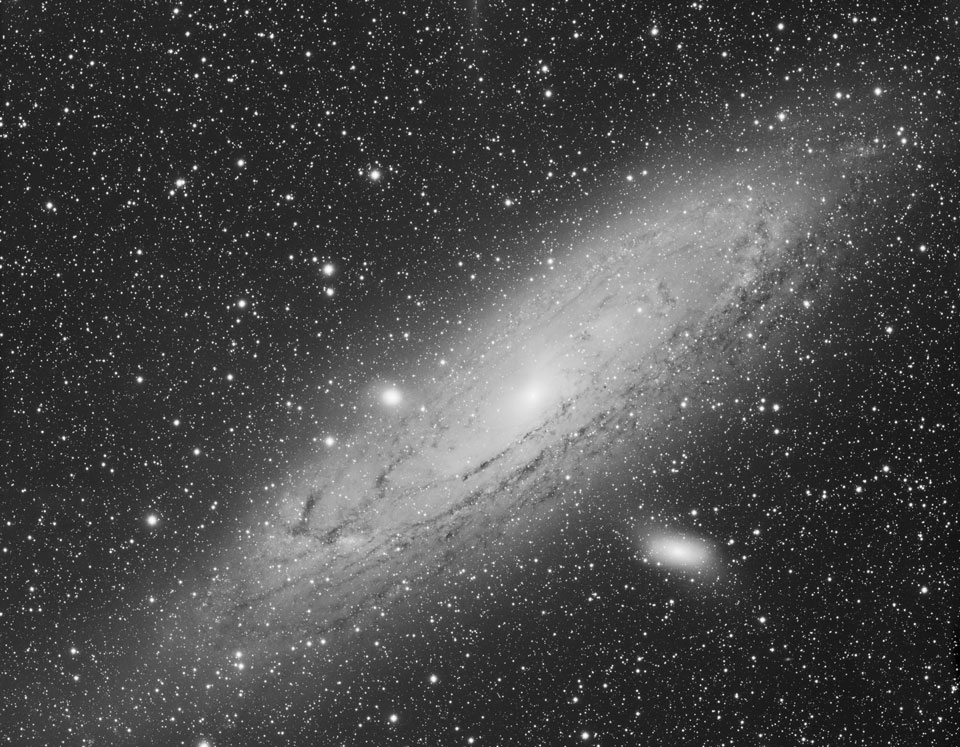
What does the Andromeda galaxy really look like? The featured image shows how our Milky Way Galaxy's closest major galactic neighbor really appears in a long exposure through Earth's busy skies and with a digital camera that introduces normal imperfections. The picture is a stack of 223 images, each a 300 second exposure, taken from a garden observatory in Portugal during 2019. Obvious image deficiencies include bright parallel airplane trails, long and continuous satellite trails, short cosmic ray streaks, and bad pixels. These imperfections were actually not removed with Photoshop specifically, but rather greatly reduced with a series of computer software packages that included Astro Pixel Processor, DeepSkyStacker, and PixInsight. All of this work was done not to deceive you with a digital fantasy that has little to do with the real likeness of the Andromeda galaxy (M31), but to minimize Earthly artifacts that have nothing to do with the distant galaxy and so better recreate what M31 really does look like.
post sent by @ - tfrbot.com
Читать полностью…
Astronomy Picture Of the Day
26 September 2026 06:57
Globular star cluster Omega Centauri packs about 10 million stars much older than the Sun into a volume some 150 light-years in diameter. Also known as NGC 5139, at a distance of 15,000 light-years it's the largest and brightest of 200 or so known globular clusters that roam the halo of our Milky Way galaxy. Though most star clusters consist of stars with the same age and composition, the enigmatic Omega Cen exhibits the presence of different stellar populations with a spread of ages and chemical abundances. In fact, Omega Cen may be the remnant core of a small galaxy merging with the Milky Way. With a yellowish hue, Omega Centauri's red giant stars are easy to pick out in this sharp telescopic view. A two-decade-long exploration of the dense star cluster with the Hubble Space Telescope has revealed evidence for a massive black hole near the center of Omega Centauri.
post sent by @ - tfrbot.com
Читать полностью…
Astronomy Picture Of the Day
24 September 2026 06:44
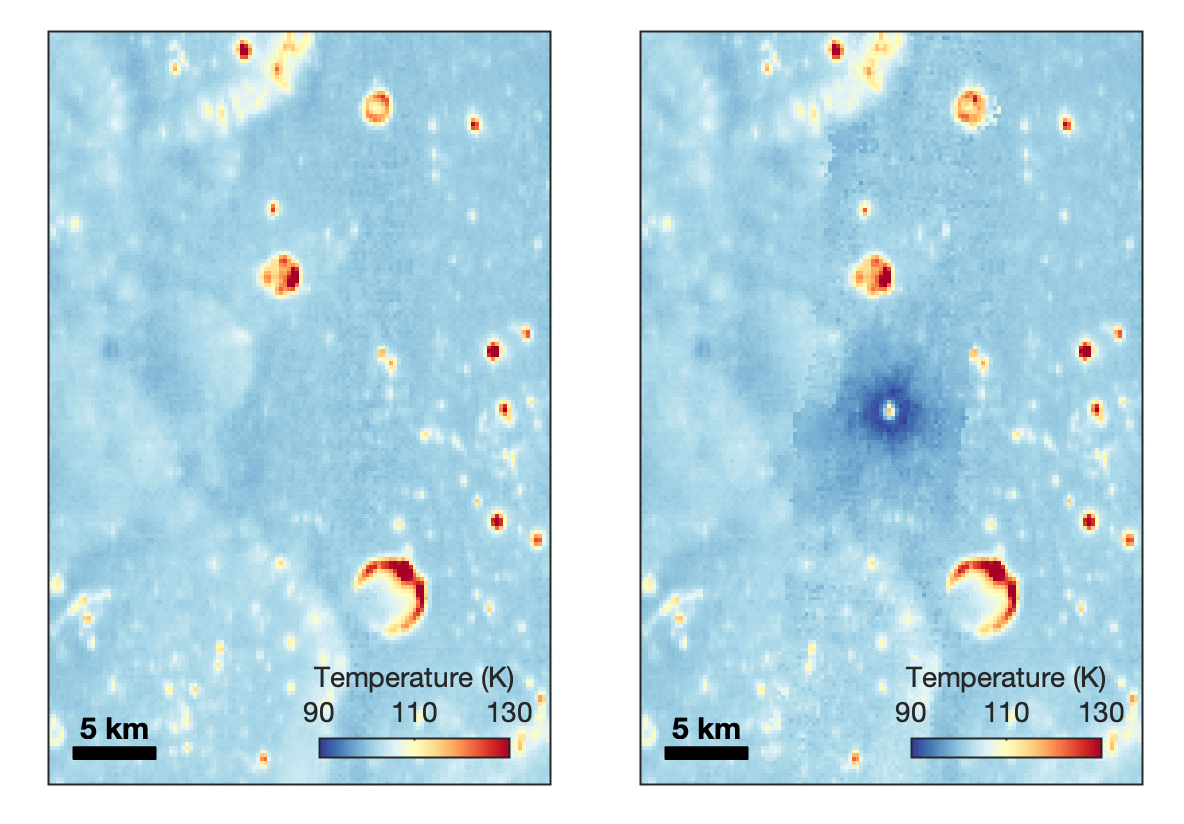
A once-in-a-lifetime crater has appeared on the Moon! A comet or asteroid roughly the size of a humpback whale (approximately 10-20 meters, 30-60 feet) crashed into the Moon sometime between April and May of 2024. The Lunar Reconnaissance Orbiter (LRO), with its monthly monitoring of the Moon, captured today’s images of the lunar surface before and after the event. The resulting crater, named after Apollo-era lunar scientist McGetchin, is two soccer fields across. Craters of this size are only expected once every 132 years! Follow up thermal imaging revealed a large cold spot that surrounds the warm crater. Surface impacts will puff up the loose lunar sediment, or regolith, making it less dense and harder to retain heat. This event affected an area much larger than the visible crater, which will inform humanity’s understanding of surface impacts and the evolution of the Moon’s surface. It also reminds us all to be thankful for Earth's atmosphere.
post sent by @ - tfrbot.com
Читать полностью…
Astronomy Picture Of the Day
22 September 2026 06:07
When does a nebula look like a comet? In this crowded starfield covering over two degrees within the high-flying constellation of the Swan (Cygnus), the eye is drawn to the Cocoon Nebula. A compact star forming region, the cosmic Cocoon punctuates a nebula bright in emission and reflection on the lower right, with a long trail of interstellar dust clouds to the left, making the entire complex appear a bit like a comet. Cataloged as IC 5146, the central bright head of the nebula spans about 10 light years, while the dark dusty tail spans nearly 100 light years. Both are located about 2,500 light years away. A bright star near the colorful nebula's center likely supplies power and helps clear out a cavity. The long dusty filaments of the tail, although dark in this visible light image, hide stars in the process of formation. The featured image was captured in July from Death Valley, California, USA.
post sent by @ - tfrbot.com
Читать полностью…
Astronomy Picture Of the Day
20 September 2026 06:14
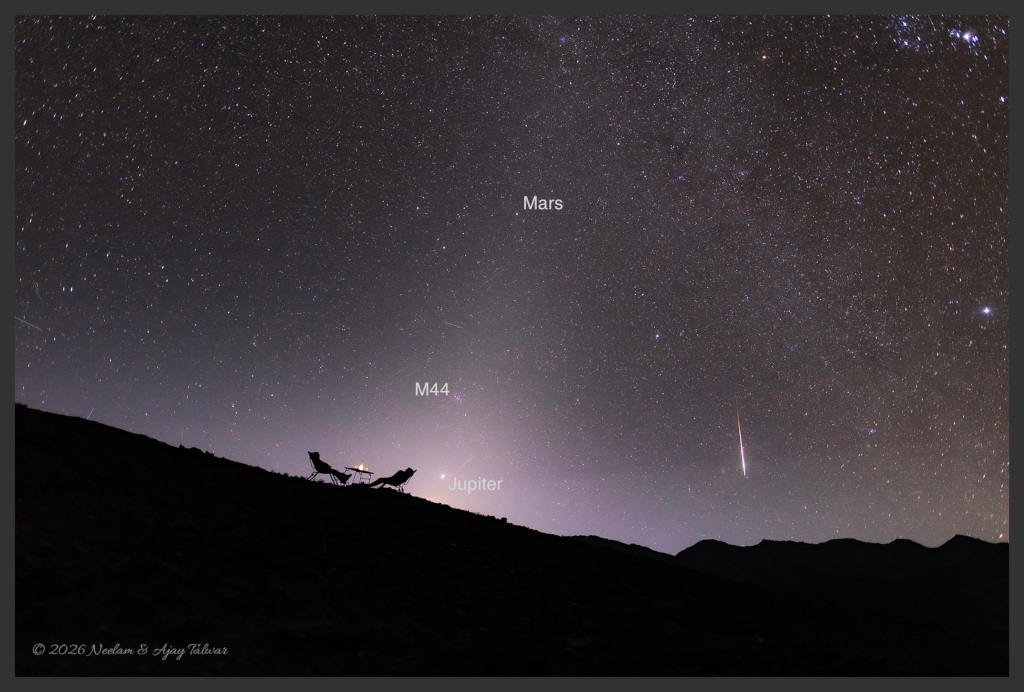
Also known as the false dawn, a luminous band of zodiacal light is captured in this dark night skyscape. The serene view was recorded just before the beginning of astronomical twilight during September's star party at the remote Hanle Dark Sky Reserve, Ladakh, India, planet Earth. At about 4,500 meters altitude, the dark sky reserve presents a haven for hardy stargazing and astrophotography enthusiasts. While meteors streak through the night, bright planet Jupiter appears immersed in the faint zodiacal glow near the eastern horizon. Follow the zodiacal band toward the zenith to find open star cluster M44 and a yellowish tinged planet Mars near the center of the frame. In fact, serendipitous detections of interplanetary dust by NASA's Juno spacecraft suggest Mars itself is the source of dust that back scatters sunlight and creates zodiacal light in planet Earth's night.
post sent by @ - tfrbot.com
Читать полностью…
Astronomy Picture Of the Day
18 September 2026 17:53
This treasure chest is full of stars. The featured image was obtained with NASA's James Webb Space Telescope and shows a dust pillar in the Carina Nebula inside our Galaxy, roughly 7500 light-years away. It is formed by interstellar gas and dust, and shaped by powerful stellar winds and radiation form neighboring stars like the nearby Eta Carinae stellar system which is more luminous than 5 million suns. The star formation inside the pillar is excavating its head, creating the open lid of the chest. Astronomers estimate that there are about 70 stars in a compact cluster inside the pillar. This cluster is now thought to be only around 1.3 million years old. Its bounty of young stars includes a massive star approximately 19 times as massive as the Sun. More massive stars are rarer, shine brighter and evolve faster than less massive stars. They are the shiniest jewels in the treasure chest.
post sent by @ - tfrbot.com
Читать полностью…
Astronomy Picture Of the Day
16 September 2026 07:02
There was something behind the clouds. Upon close inspection, it was the Moon, which was hard to see yesterday around noon above the small village of Cessy, France. But soon, it was not only the Moon. As expected, a bright dot suddenly appeared from behind the Moon -- the planet Venus far in the distance. Captured in the single featured exposure, both appeared to show a crescent phase. The Moon's crescent was quite slight -- with only about 10 percent of its face illuminated by the Sun. In contrast, Venus's crescent was more full -- showing about 25 percent illumination. Venus appeared brighter because it is nearer the Sun and because its clouds are more reflective than the dark lunar surface. An occultation of Venus by the Moon is visible to only about 10 percent of the Earth, but in yesterday's event even most of that was experiencing daytime.
post sent by @ - tfrbot.com
Читать полностью…
Astronomy Picture Of the Day
13 October 2026 06:57
This stairway in Chile brings you only a little bit closer to heaven. But ooh, the sky above it makes you wonder. For example, you may wonder about the dark lane of our own Milky Way galaxy rising behind the expansive Atacama Desert in Chile, the band of zodiacal light on the upper left, the green and red airglow just above the horizon, the star Spica in the zodiacal light stripe, and, at the very top on the right, the Small Magellanic Cloud galaxy. The Desert Staircase sculpture is in the foreground, and this image was timed to catch the picturesque peering perch just in front of the near-vertical Milky Way band. Upon close inspection of the horizon you can find, left to right, some Andes Mountains, the Licancabur volcano, and the town lights of San Pedro de Atacama. The featured wide-angle composite was captured in July 2025.
post sent by @ - tfrbot.com
Читать полностью…
Astronomy Picture Of the Day
11 October 2026 06:30
Scientists are melting holes in the bottom of the world. In fact, almost 100 holes melted near the South Pole are now being used as an astronomical observatory. Astronomers with the IceCube Neutrino Observatory lowered a long string knotted with basketball-sized light detectors into each vertical lake. The water in each hole soon refreezes. The detectors attached to the strings are sensitive to blue light emitted in the surrounding clear ice. Such light results from fast-moving secondary particles liberated when high-energy neutrinos emitted by powerful processes out in the universe collide with ice molecules. IceCube has now detected many illuminating neutrinos. Pictured in 2010, one of the last of IceCube's detector strings is lowered into the freezing abyss, making IceCube the largest neutrino detector ever created. In recognition of unprecedented discoveries, it was announced earlier this week that a founding leader of the IceCube Collaboration will be awarded the Nobel Prize in Physics.
post sent by @ - tfrbot.com
Читать полностью…
Astronomy Picture Of the Day
09 October 2026 06:49
Stickney Crater, the largest crater on the martian moon Phobos, is named for Chloe Angeline Stickney Hall, mathematician and wife of astronomer Asaph Hall. Asaph Hall discovered both the Red Planet's moons in 1877. Over 9 kilometers across, Stickney is nearly half the diameter of Phobos itself, so large that the impact that blasted out the crater likely came close to shattering the tiny moon. This enhanced-color image of Stickney and surroundings was recorded by the HiRISE camera onboard the Mars Reconnaissance Orbiter as it passed within some six thousand kilometers of Phobos in March of 2008. Even though the surface gravity of asteroid-like Phobos is less than 1/1000th Earth's gravity, streaks suggest loose material slid down inside the crater walls over time. Light bluish regions near the crater's rim could indicate a relatively freshly exposed surface. The origin of the curious grooves along the surface is mysterious but may be related to tidal stresses experienced by close-orbiting Phobos or the crater-forming impact itself.
post sent by @ - tfrbot.com
Читать полностью…
Astronomy Picture Of the Day
07 October 2026 06:30
"Happy New Year!" No, wait, this is not a fireworks display. This image shows Nebula Pa 30, observed with the Gemini North Telescope in Hawai'i. It is likely the remnant of an old supernova explosion: separate historical records by Chinese, Japanese and Arabic astronomers tell of a "guest star" that appeared in the sky for 185 days in the year 1181. It is believed that this bright new point of light came from the supernova that caused the fireworks in Pa 30. Astronomers don't know exactly what happened in this unusual explosion, classified as a Type Iax supernova, but it is thought to be caused by the merger of two white dwarfs. The mysterious central star in the image is extremely hot and produces a strong wind, possibly forming the radial filaments. Look closely at them: those pearl-like knots stringing the filaments are 4 light-days in diameter. Understanding how a supernova created this amazing nebula continues an 845-year old mystery (and counting).
post sent by @ - tfrbot.com
Читать полностью…
Astronomy Picture Of the Day
05 October 2026 06:26
A deep image of the Sombrero galaxy reveals surprises. M104 is named the Sombrero galaxy because, on shorter exposures, it looks like a hat. A key defining feature of this huge galaxy is a dark brim of dust that circles the disk galaxy's center. A much longer exposure, however, brings up a hairy past where a bright, hazy halo is revealed that extends well past the central disk and contains many unresolved stars. Surprisingly, in this stellar haze, structures can be seen that include a diagonal ring. These structures and tidal streams provide fresh evidence that M104 had a violent past and is surely the result of collisions and mergers of smaller galaxies. Light takes about 30 million years to reach us from the Sombrero galaxy, which fully spans about 150 thousand light years across. The featured image was taken over seven days in mid-2026 from Namibia.
Your Sky Surprise: What picture did APOD feature on your birthday? (post 1995)
post sent by @ - tfrbot.com
Читать полностью…
Astronomy Picture Of the Day
03 October 2026 06:32
On sol 1943 of its journey of exploration across the surface of Mars, the Curiosity Rover recorded this selfie at the south rim of Vera Rubin Ridge. Of course a sol is a Martian solar day, about 40 minutes longer than an Earth day. Curiosity's sol 1943 corresponds to Earth date January 23, 2018. Also composed as an interactive 360 degree VR, the mosaicked panorama combines 61 exposures taken by the small car-sized rover's Mars Hand Lens Imager (MAHLI). Frames containing the imager's arm have been edited out while the extended background used was taken by the rover's Mastcam on sol 1903. At the top of the rover's mast, sitting above the Mastcam, the laser-firing ChemCam housing blocks out the distant, 5 kilometer high peak of Mount Sharp. On Earth date August 26, 2026, Curiosity marked an total elevation gain of 1 kilometer in its trek from the floor of Gale Crater up the slope of Mount Sharp.
post sent by @ - tfrbot.com
Читать полностью…
Astronomy Picture Of the Day
30 September 2026 16:34
Peculiar spiral galaxy Arp 78 is found within the boundaries of the head strong constellation Aries. Some 100 million light-years beyond the stars and nebulae of our Milky Way galaxy, the island universe is an enormous 200,000 light-years across. Also known as NGC 772, it sports a prominent, outer spiral arm in this detailed cosmic portrait. Tracking along sweeping dust lanes and lined with young blue star clusters, Arp 78's overdeveloped spiral arm is pumped-up by galactic-scale gravitational tides. Interactions with its brightest companion galaxy, the more compact NGC 770 seen directly below the larger spiral, are likely responsible. Embedded in faint star streams revealed in the deep telescopic exposure, NGC 770's fuzzy, elliptical appearance contrasts nicely with spiky foreground Milky Way stars.
post sent by @ - tfrbot.com
Читать полностью…
Astronomy Picture Of the Day
29 September 2026 06:26
What color is the universe? More precisely, if the entire sky were smeared out, what color would the final mix be? This whimsical question came up when trying to determine what stars are commonplace in nearby galaxies. The answer, depicted here, is a conditionally perceived shade of beige. In computer parlance: #FFF8E7. To determine this, astronomers computationally averaged the light emitted by one of the larger samples of galaxies analyzed: the 200,000 galaxies of the 2dF Galaxy Redshift Survey. The resulting cosmic spectrum has some emission in all parts of the electromagnetic spectrum, but a single perceived composite color. This color has become much less blue over the past 10 billion years, indicating that redder stars are becoming more prevalent. In a contest to better name the color, notable entries included skyvory, univeige, and the winner: cosmic latte.
post sent by @ - tfrbot.com
Читать полностью…
Astronomy Picture Of the Day
27 September 2026 06:57
On August 15, this perseid meteor streaked through night skies over the Observatorio del Roque de los Muchachos at La Palma, Canary Islands, Spain. The bright and colorful meteor trail was captured next to the central Milky Way, whose dark interstellar dust clouds and luminous starlight reach above the horizon. In the foreground of this tantalizing celestial scene is the 23 meter diameter mirror of the prototype Large-Sized Telescope (LST-1). LST-1 is the first telescope constructed at the northern hemisphere site of the innovative Cherenkov Telescope Array Observatory. With 198 hexagonal mirror segments and a large, high-efficiency, pixelized camera, LST-1 is designed to detect extremely brief, atmospheric visible light flashes. Lasting about a billionth of a second, the visible light flashes are triggered by energetic gamma-rays from cosmic sources such as distant active galaxies and gamma-ray bursts. Of course, on that night some individual mirror segments of LST-1 also reflected the atmospheric flash of the bright perseid meteor.
post sent by @ - tfrbot.com
Читать полностью…
Astronomy Picture Of the Day
25 September 2026 06:13
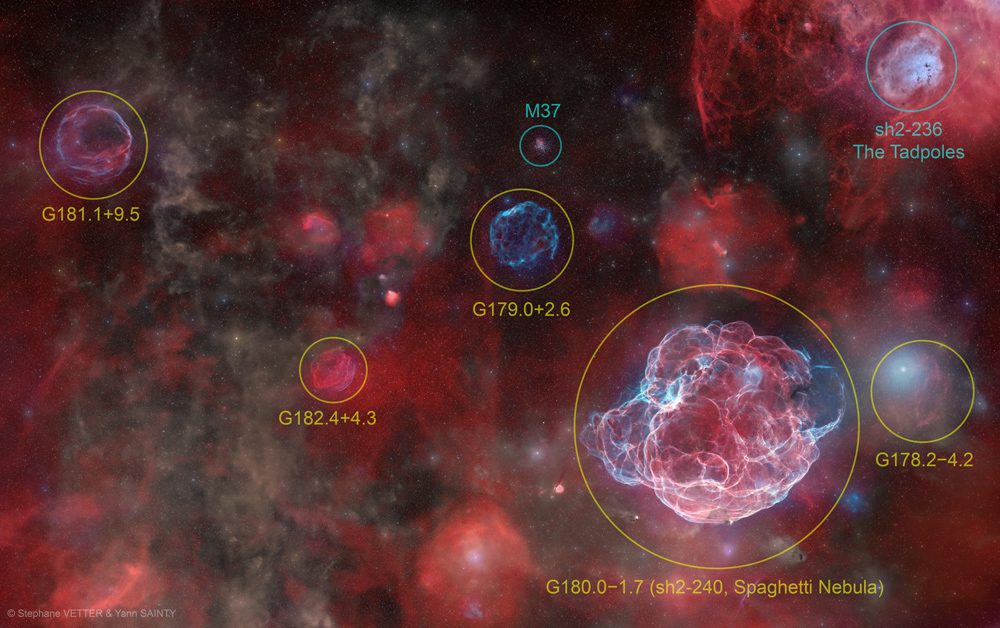
The ghosts of five supernovas haunt this extraordinary image. It was acquired at Oukaïmeden Observatory in Morocco with approximately 200 hours of observations and shows a large patch of the sky, equivalent to the area of one thousand full moons tiled together, in the constellation of Auriga (the Charioteer). From left to right, the five supernova remnants visible across the field are G181.1+9.5, G182.4+4.3, G179.0+2.6, G180.0−1.7 (Sh2-240, the Spaghetti Nebula), and G178.2−4.2. They are highlighted in the annotated image, together with open cluster M37 and the Tadpole Nebula. As each explosion expanded into space, it created a growing shell of shocked gas and delicate filamentary structures shown in red (hydrogen) and blue (oxygen), respectively. These ancient stellar explosions happened independently; they are at various distances up to about several thousands of light-years away from Earth and have estimated ages up to tens of thousands of years old. Early humans may have witnessed them as bright new stars, fading over weeks or months.
post sent by @ - tfrbot.com
Читать полностью…
Astronomy Picture Of the Day
23 September 2026 06:12
This shot captured an unexpected silhouette. Which is it? It isn't the sunspots, the small dark regions caused by concentrated magnetic fields visible around the Sun's bright disk. Sunspots typically last for weeks and were expected, since these spots were seen previously. It isn’t the International Space Station (ISS), the small dark structure on the middle left. This is because the featured picture was planned with sub-second timing to record the iconic structure passing before the Sun. It is the airplane. Just as this exposure was taking place in June, from Prasek in the Czech Republic, an airplane began its own miniature partial eclipse. The result is this triply aligned image of our Sun. The photographer estimates that the chance of any random Sun image containing silhouettes of both a space station and an airplane, from that location, is about 30 million to one.
post sent by @ - tfrbot.com
Читать полностью…
Astronomy Picture Of the Day
21 September 2026 06:12
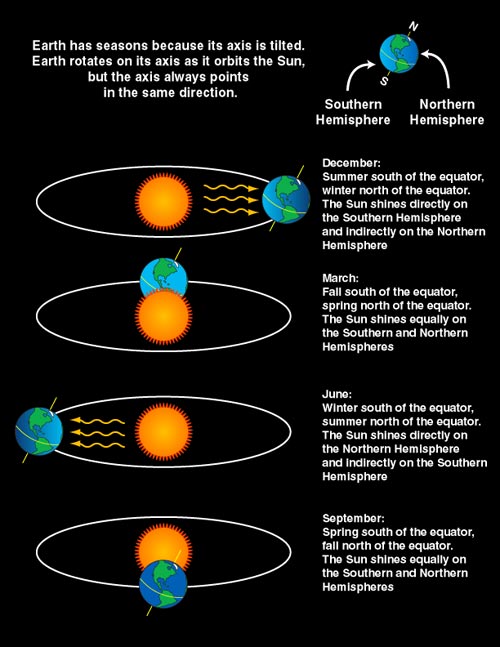
If you went outside at the same time every day and took a picture that included the Sun, how would the Sun's position change? A visual answer to that question is an analemma, a composite image taken from the same spot at the same time over the course of a year. The featured analemma was composed from images taken every few days at noon near the village of Callanish in the Outer Hebrides in Scotland, UK. In the foreground are the Callanish Stones, a stone circle built around 2700 BC during humanity's Bronze Age. It is not known if the placement of the Callanish Stones has or had astronomical significance. The ultimate causes for the figure-8 shape of this and all analemmas are the tilt of the Earth axis and the ellipticity of the Earth's orbit around the Sun. At the solstices, the Sun will appear at the top or bottom of an analemma. The featured image was taken near the December solstice and so the Sun appears near the bottom. Equinoxes, however, correspond to analemma middle points -- not the intersection point. In two days there will be an equinox ("equal night"), when day and night are equal over all of planet Earth. Many cultures celebrate a change of season at an equinox.
post sent by @ - tfrbot.com
Читать полностью…
Astronomy Picture Of the Day
19 September 2026 06:19
The small, northern constellation Triangulum harbors this magnificent face-on spiral galaxy, Messier 33. Its popular names include the Pinwheel Galaxy or just the Triangulum Galaxy. M33 is over 50,000 light-years in diameter, third largest in the Local Group of galaxies after the Andromeda Galaxy (M31), and our own Milky Way. About 3 million light-years from the Milky Way, M33 is itself thought to be a satellite of the Andromeda Galaxy and astronomers in these two galaxies would likely have spectacular views of each other's grand spiral star systems. As for the view from the Milky Way, this sharp telescopic image shows off M33's blue star clusters and pinkish star forming regions along the galaxy's loosely wound spiral arms. In fact, the cavernous NGC 604 is the brightest star forming region, seen here at about the 5 o'clock position from the galaxy center. Like M31, M33's population of well-measured variable stars have helped make this nearby spiral a cosmic yardstick for establishing the distance scale of the Universe.
post sent by @ - tfrbot.com
Читать полностью…
Astronomy Picture Of the Day
17 September 2026 06:15
Sometimes where Hubble finds darkness, Webb sees light. An example is today’s composite images of Messier 64 (M64), a nearby spiral galaxy of many names. The dark band of dust partially blocking its bright core earned it the moniker “the Black Eye Galaxy.” Webb’s Mid-InfraRed Instrument (MIRI) sees that dust, shown in red, as it absorbs and re-emits light from surrounding newborn stars. These young stars are embedded in pink star-forming regions in the secondary Hubble-only image. M64’s inner and outer gas regions counter-rotate, creating regions of increased star formation where the two gas “currents” meet and compress. A merger between M64 and a smaller galaxy was likely the cause of the opposing motion of the outer gas. Spiral galaxies were once thought to have peaceful histories. M64 was key evidence that spiral galaxies, including the Milky Way, can and do experience mergers. Webb’s view of M64 will tell astronomers about the structure, motion, and composition of the galaxy’s dust and add context to the galaxy’s merger history and evolution.
post sent by @ - tfrbot.com
Читать полностью…
Astronomy Picture Of the Day
15 September 2026 06:20
The hydrogen in your body and present in every molecule of water came from the Big Bang. There are no other appreciable sources of hydrogen in the universe. The carbon in your body was made by nuclear fusion in the interior of stars, as was the oxygen. Much of the iron in your body was made during supernovas of stars that occurred long ago and far away. The gold in your jewelry was likely made from neutron stars during collisions that may have been visible as short-duration gamma-ray bursts or gravitational wave events. Elements like phosphorus and copper are present in our bodies in only small amounts but are essential to the functioning of all known life. The featured periodic table is color coded to indicate humanity's best guess as to the nuclear origin of all known elements. The sites of nuclear creation of some elements, such as copper, are not really well known and are continuing topics of observational and computational research.
post sent by @ - tfrbot.com
Читать полностью…


 3897
3897





.svg)
#/media/File:PIA15279_3rovers-stand_D2011_1215_D521.jpg)